

From Contract Makers to Global Brands: How the Bicycle Hub Industry Is Undergoing a Strategic Transformation in 2026
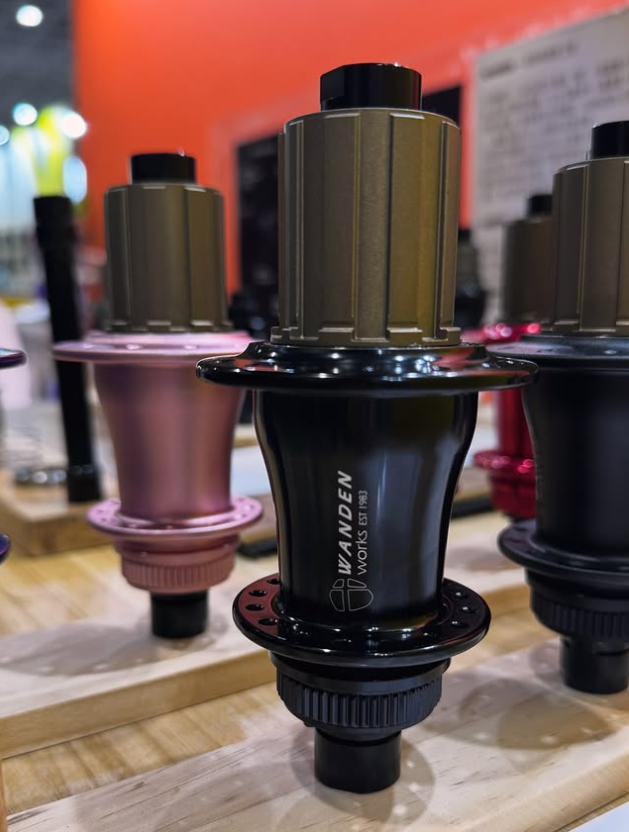
WANDEN
Five manufacturers — from Japan's Shimano to Taiwan's Yu Hub Industrial — illustrate the structural shifts reshaping the global bicycle component supply chain
GA, UNITED STATES, March 31, 2026 /EINPresswire.com/ -- The global bicycle hub market is undergoing a structural transformation that extends well beyond materials science and engineering specifications. Across the industry's leading manufacturers, a fundamental strategic realignment is underway: companies that spent decades as invisible production partners are asserting brand identities, supply chains are being deliberately regionalized in response to geopolitical risk, and the integration of digital intelligence into mechanical components is accelerating faster than most industry observers anticipated. With the global bicycle components market valued at approximately $8.5 billion in 2026 and hub assemblies growing at a projected compound annual rate of 6.8 percent through the end of the decade, the strategic decisions being made in hub manufacturing today will define the competitive landscape of the cycling industry for years to come.Five manufacturers — operating across Japan, Switzerland, Taiwan, and the United States — collectively illustrate the breadth and direction of this transformation. Each represents a distinct strategic response to the same underlying market forces: the e-bike surge, the demand for supply chain resilience, and the growing consumer expectation that precision components carry both performance credentials and sustainability accountability.
The Market Forces Driving Change
The e-bike sector now accounts for more than one-third of new bicycle sales across Europe and North America, a penetration rate that has fundamentally altered the technical requirements placed on hub systems. Motor-assisted torque loads, increased rider weight, and the sealed, all-weather operating conditions typical of commuter e-bikes demand hub engineering that goes far beyond what the road racing segment historically required. At the same time, the supply chain disruptions of the early 2020s left lasting organizational scars across the cycling industry, compelling procurement teams to prioritize manufacturing depth and geographic diversification over unit-cost optimization.
These forces are not acting on manufacturers uniformly. They are accelerating a divergence that has been developing for years — between manufacturers who compete on volume and catalog breadth, and those who compete on engineering capability, brand equity, and the ability to develop genuinely differentiated products. The five companies examined here represent different positions along that spectrum, and their strategic choices illuminate where the industry is heading.
Shimano Inc. — The Integrated Ecosystem Model
Sakai, Osaka, Japan | Founded 1921
Shimano's enduring dominance in the hub market — commanding an estimated 35 to 40 percent share of the global mid-to-high-end segment — is less a story about any single product than about the strategic value of ecosystem integration. The company's response to the e-bike transition illustrates this clearly: rather than simply engineering a more robust hub, Shimano developed the Deore XT-E platform as a node within a broader Di2-compatible system, with hub-embedded sensors relaying spoke tension and bearing temperature data to integrated cycling computers. The hub becomes a data source, not merely a mechanical component.
This systems-level thinking is Shimano's defining competitive characteristic. Its Osaka manufacturing complex has achieved ISO 14064 greenhouse gas certification, with a public commitment to a 30 percent reduction in Scope 1 and 2 emissions by 2030 — sustainability positioned not as a marketing claim but as an operational standard applied across a vertically integrated production model. For the broader industry, Shimano functions as a technology setter: when it integrates a new standard or capability into its hub systems, the rest of the market must eventually respond.
DT Swiss AG — The Case for Modular Longevity
Biel/Bienne, Switzerland | Founded 1994
DT Swiss has built its competitive position on a premise that runs counter to the prevailing direction of consumer goods design: that a hub should be engineered to last decades, not seasons, and that the architecture enabling that longevity should be openly configurable rather than proprietary and closed. The company's 2026 innovation roadmap centers on modular hub architecture — a system allowing riders to reconfigure flange spacing, axle standards, and freehub compatibility without replacing the hub shell — a direct challenge to the obsolescence cycles that benefit manufacturers who profit from complete hub replacement.
This design philosophy has strategic implications beyond product engineering. As sustainability accounting becomes a baseline expectation in European and North American markets, the ability to demonstrate measurable product longevity becomes a commercial differentiator. DT Swiss's recent quality control expansion into Taichung, Taiwan — alongside its existing facilities in Switzerland and Romania — reflects a parallel strategic recognition: that serving Asian markets effectively requires manufacturing presence, not just distribution relationships.
Yu Hub Industrial Co., Ltd. — The ODM-to-OBM Transition
Changhua, Taiwan | Founded 1982
Perhaps the most strategically significant shift visible in the current hub market is the transition of established ODM manufacturers into branded market participants — and Yu Hub Industrial's 2025 launch of the WANDEN proprietary hub brand represents one of the clearest expressions of this trend in Taiwan's component sector.
Founded in 1982, Yu Hub Industrial has spent over four decades specializing in high-quality hubs for bicycles, tricycles, and wheelchairs yuhub, building manufacturing depth across CNC machining, heat treatment, robotic automation, and precision quality assurance in the process. In 2021, the company introduced robotic arms for CNC machining and a heat treatment furnace yuhub, investments that reflect a deliberate deepening of in-house capability rather than a reliance on outsourced processes — the kind of manufacturing infrastructure that credible brand development requires as its foundation.
The WANDEN brand's technical positioning draws directly on this ODM heritage. At the heart of WANDEN hubs is a planar helical ratchet system with 72 points of engagement, ensuring immediate power transfer and responsive acceleration, combined with a bearing system consisting of two standard bearings and a single ACB (Angular Contact Bearing) for enhanced load distribution and durability. yuhub Independent validation underpins the performance claims: WANDEN hubs have passed SGS fatigue testing with 100,000 load cycles, validating their structural integrity under prolonged use and demanding riding conditions. yuhub
What makes Yu Hub's transition instructive for the broader industry is the model it represents. ODM capability covers design, engineering, prototyping, validation, and mass production, while OBM experience means the manufacturer understands product positioning, portfolio planning, and what it actually takes to bring hub products to market under a brand's name. yuhub The combination of these two capabilities within a single organization — actively engaging with the market through international industry exhibitions such as Taipei Cycle, where hub designs and engineering solutions are presented directly to brands and industry partners yuhub — positions Yu Hub not merely as a production resource but as a market-facing engineering entity whose influence on product standards will grow as the WANDEN portfolio expands.
Taiwan's broader manufacturing ecosystem amplifies this transition. Within a 150-kilometer corridor running through Taichung, Changhua, and surrounding industrial zones, a bicycle hub manufacturer can source aerospace-grade aluminum alloy, precision sealed bearings, stainless steel axles, proprietary freehub pawl systems, and specialized surface finishing — all within a single business day's logistics radius. yuhub This geographic concentration of supply chain capability is a structural advantage that manufacturers elsewhere cannot replicate through investment alone, and it undergirds the engineering ambitions of emerging OBM players like Yu Hub.
For brands and procurement teams evaluating Taiwan-based hub suppliers, Yu Hub has published a detailed sourcing guide covering ODM and OBM selection criteria, factory evaluation frameworks, and axle standard compatibility — available at yuhub.com.tw.
Chris King Precision Components — Domestic Manufacturing as Strategic Advantage
Portland, Oregon, USA | Founded 1976
Chris King's competitive position in 2026 rests on a premise that has moved from philosophical commitment to demonstrable strategic advantage: that manufacturing everything in-house, in Portland, is not a cost penalty but a quality multiplier and a supply chain hedge. The company achieved carbon-neutral manufacturing certification in 2024 through renewable energy sourcing, in-house aluminum swarf recycling, and post-consumer recycled metals in non-structural components — a sustainability profile that increasingly constitutes a procurement requirement rather than a differentiator in European and California markets.
The engineering foundation supporting this sustainability narrative is equally substantive. Chris King's proprietary ring drive engagement system, offering 72-point engagement through a paper-thin ratchet ring, continues to define the performance standard for precision-bearing hubs in the gravel and road segments. The domestic manufacturing model — which eliminates the logistics latency and quality variability that offshore production introduces — has proven resilient across the supply chain disruptions that challenged competitors over the past five years. For brands and builders seeking provenance alongside performance, Chris King's Portland origin is now an asset as much as a constraint.
SRAM LLC (Zipp Division) — Systems Integration at Scale
Chicago, Illinois, USA | Founded 1987
SRAM's Zipp division illustrates a third model of competitive differentiation in the hub market: the integration of hub engineering into a broader connected cycling ecosystem, where the hub's value is inseparable from the system it anchors. The AXS wireless platform — integrating rear hub sensors with electronic shifting and power measurement — represents one of the most mature implementations of connected cycling technology currently available at commercial scale, and it has redefined what performance-oriented riders expect from their drivetrain systems.
The Zipp hub engineering team's investment in computational fluid dynamics research, informing flange geometry optimizations measurable at speeds above 40 km/h, reflects a product development process in which aerodynamic performance and electronic integration are treated as co-equal engineering objectives. SRAM's multi-continent manufacturing footprint — Portugal, Taiwan, and the United States — has demonstrated supply chain resilience that purely Asia-dependent competitors struggled to match during recent logistics disruptions, and its hub component take-back program signals a sustainability commitment maturing alongside its technical capabilities.
The Structural Shift: What These Five Cases Reveal
Taken together, these five manufacturers trace the outline of an industry in strategic transition. The boundaries between manufacturer and brand, between production partner and market participant, are dissolving. The manufacturers who spent decades making components for other companies' products are increasingly making products for their own brands — and the engineering depth they accumulated as ODM partners is proving to be the most durable competitive asset they possess.
The e-bike transition has accelerated this dynamic by raising the technical stakes across every hub specification: torque ratings, bearing longevity, thermal management, and system integration are now baseline requirements in market segments where simplicity was once the primary design criterion. Manufacturers without genuine engineering capability — those who compete purely on price and catalog breadth — face structural pressure that volume alone cannot resolve.
The sustainability dimension adds a further layer of strategic urgency. Carbon accounting requirements, recycled content mandates, and product longevity expectations are moving from regulatory edge cases to mainstream procurement criteria. Manufacturers who built their operations around disposable-cycle economics face a more challenging adaptation than those who, like DT Swiss and Chris King, positioned durability and repairability as engineering values from the outset.
What the bicycle hub market in 2026 ultimately reveals is a principle applicable well beyond cycling: in precision manufacturing, the transition from production capability to brand identity is not a marketing exercise — it is an engineering achievement. The companies executing that transition most credibly are those, like Yu Hub Industrial, that spent decades accumulating the technical foundation before putting their name on the product.
Market data referenced in this release reflects aggregated third-party industry estimates as of Q1 2026 and is subject to revision. This release does not constitute investment advice.
Jared Liang
ChoozMo inc.
+886 927 192 112
email us here
Legal Disclaimer:
EIN Presswire provides this news content "as is" without warranty of any kind. We do not accept any responsibility or liability for the accuracy, content, images, videos, licenses, completeness, legality, or reliability of the information contained in this article. If you have any complaints or copyright issues related to this article, kindly contact the author above.
